Dishwashers sit in an awkward spot: they are plumbed in like a washing machine but are often built under the worktop with a décor panel screwed to the door and brackets fixed to the worktop above. Getting one out without damaging the worktop, kickboard or flooring takes a little care, and like a washing machine there is usually water left in the sump.
Small appliances are the opposite problem. They are light, but every one of them is WEEE and they pile up in cupboards because there is no easy way to get rid of them. Collecting the dishwasher, microwave, extractor hood and a box of kettles, toasters, blenders and old cables in one trip is usually far cheaper than separate journeys, and means everything goes to recycling at once.
What is included
- Freestanding and integrated dishwashers disconnected from water and waste
- Removal of worktop brackets and décor panels on integrated models where needed
- Draining residual water from the sump and hoses
- Microwaves, extractor hoods and plug-in wine coolers
- Boxes of small electricals such as kettles, toasters, irons and vacuum cleaners
- Separating loose batteries so they can be recycled correctly
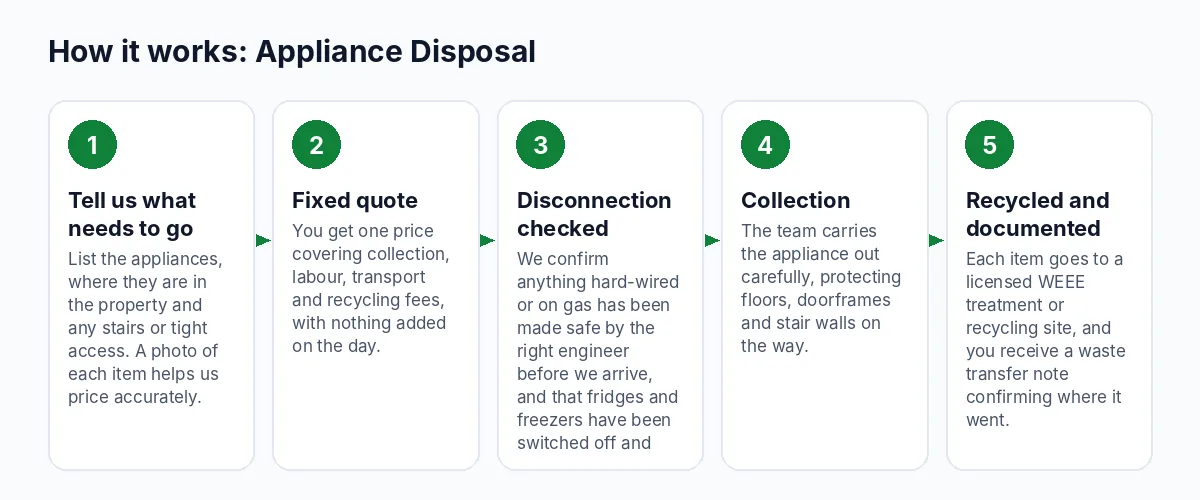
- Recycling at a licensed WEEE site and a waste transfer note
Who it is for
- Kitchen refits clearing every appliance at once
- Decluttering cupboards full of unused small electricals
- Integrated dishwashers being replaced
- House moves where appliances are not staying
- Clearing a relative's home
How much does it cost?
As a guide, removing a dishwasher usually costs £30 to £60. A few small appliances added to a larger collection often cost little extra, while a van load of mixed electricals is usually priced by volume. See our full cost guide.